The Aluminum Extrusion Process
The Aluminum Extrusion Process: How Aluminum Profiles Are Engineered for Modern Industries
The aluminum extrusion process is one of the most efficient and versatile manufacturing methods used today. Across the United States and globally, extruded aluminum profiles support industries ranging from construction and automotive to electronics, aerospace, marine, and renewable energy.
At its core, aluminum extrusion transforms solid aluminum billet into precisely engineered shapes that serve structural, architectural, and functional purposes. Whether used in window frames, heat sinks, structural framing systems, or architectural trim, aluminum extrusion allows complex profiles to be produced with strength, consistency, and efficiency.
Understanding how this process works provides valuable insight into why extruded aluminum remains a preferred material for modern manufacturing and design.
What Is Aluminum Extrusion?
Aluminum extrusion is a manufacturing process that shapes aluminum alloy into a specific cross-sectional profile by forcing heated metal through a precision-engineered die. The result is a continuous profile with uniform geometry along its length.
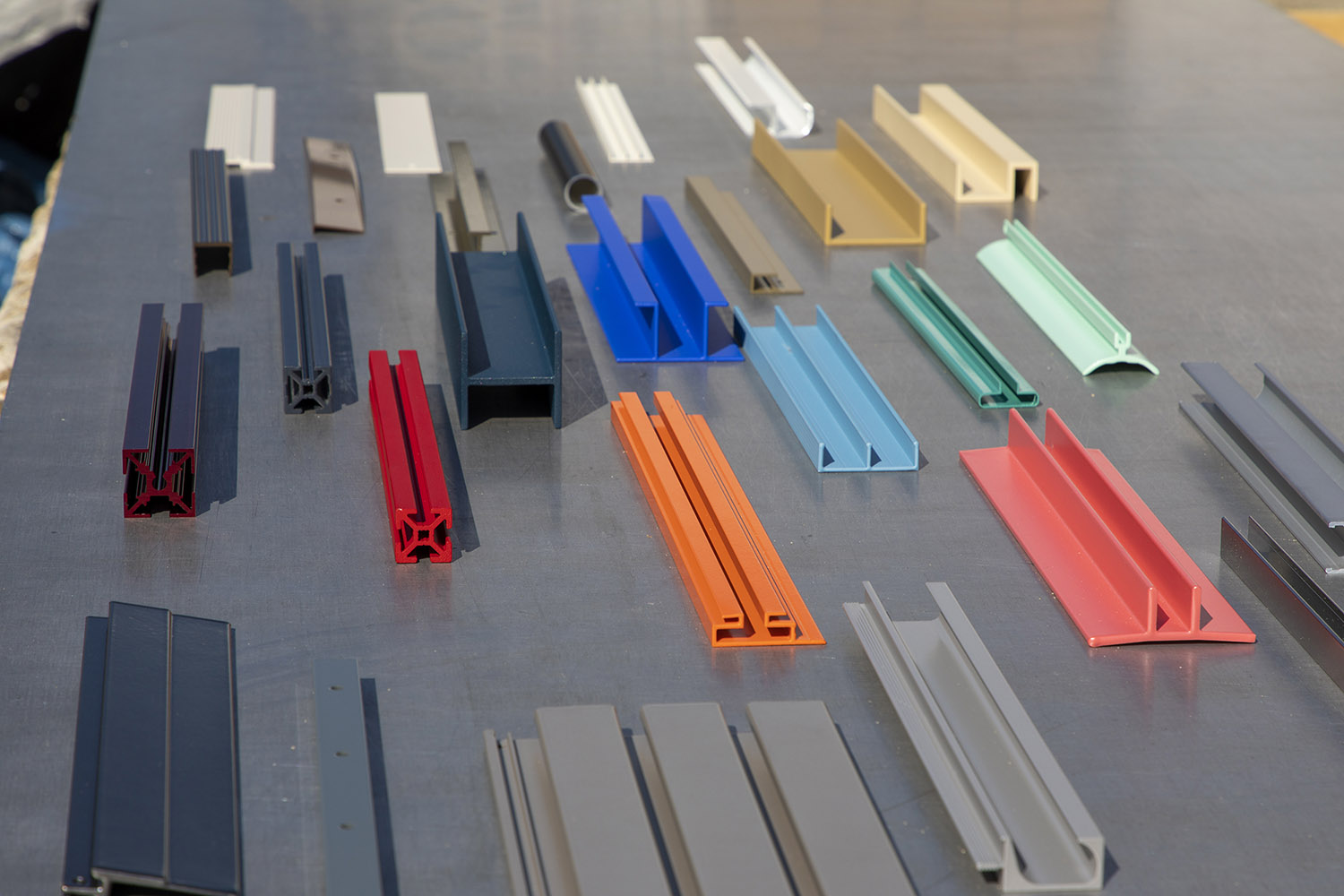
Unlike casting or machining, extrusion allows for complex internal cavities, channels, and reinforcement features to be formed in a single operation. This makes it ideal for creating both simple geometric shapes and intricate multi-cavity aluminum profiles.
Industries commonly searching for:
- Custom aluminum extrusions made in the USA
- Architectural aluminum profiles
- Structural aluminum shapes
- Industrial aluminum extrusion manufacturers
- 6061 and 6063 aluminum extrusions
Step-by-Step: How the Aluminum Extrusion Process Works
1. Billet Preparation
The process begins with an aluminum billet—typically composed of alloys such as 6061 or 6063. These alloys are widely used in architectural and structural applications due to their strength, corrosion resistance, and finishing characteristics.
The billet is preheated to a specific temperature, usually between 750°F and 925°F, depending on the alloy. Heating makes the aluminum malleable without melting it, allowing it to flow under pressure.
2. Die Engineering and Design
The die is the defining component of the extrusion process. Manufactured from hardened tool steel, the die contains a precisely machined opening that matches the desired profile cross-section.
Die design directly influences:
- Wall thickness consistency
- Structural integrity
- Internal cavity formation
- Surface finish quality
- Dimensional tolerances
The ability to customize dies allows manufacturers to produce profiles tailored to specific engineering and architectural requirements. This is why aluminum extrusion supports everything from simple flat bars to highly complex structural framing systems.
3. Extrusion Through the Press
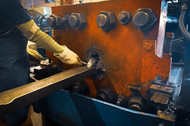
Once the billet reaches the proper temperature, it is placed into an extrusion press. A hydraulic ram applies immense pressure—often exceeding thousands of tons—forcing the aluminum through the die opening.
As the material flows through the die, it takes on the exact cross-sectional shape engineered into the tooling. The emerging extrusion is a continuous length of aluminum profile that mirrors the die geometry.
This precision allows for repeatable production of custom aluminum extrusions with tight tolerances.
4. Cooling and Quenching
As the aluminum exits the die, it must be cooled to stabilize its structure. Cooling methods vary depending on the alloy and application, but commonly include air cooling or water quenching.
Proper cooling ensures:
- Dimensional stability
- Mechanical strength
- Controlled metallurgical properties
5. Stretching and Cutting
After cooling, the extrusion is stretched to remove internal stresses and ensure straightness. It is then cut into specified lengths based on customer requirements.
Post-extrusion processes may include machining, drilling, anodizing, powder coating, or other surface treatments to meet project specifications.
Why Aluminum Extrusion Is Widely Used
The aluminum extrusion process offers a combination of material efficiency, structural performance, and design flexibility that few other manufacturing methods can match.
Key advantages include:
- Lightweight yet strong structural performance
- Excellent corrosion resistance for outdoor and marine applications
- High strength-to-weight ratio
- Precision profile geometry
- Reduced secondary fabrication requirements
- Full recyclability
For industries seeking sustainable manufacturing solutions, aluminum extrusion stands out. Aluminum can be recycled repeatedly without loss of structural properties, making it an environmentally responsible choice for modern infrastructure and product development.
Common Alloys Used in Aluminum Extrusion
Two of the most widely used alloys in aluminum extrusion manufacturing in the USA are:
- 6063 Aluminum - Often used in architectural aluminum extrusions, this alloy offers excellent surface finish quality and corrosion resistance. It is commonly specified for window frames, trim, slatwall systems, and decorative profiles.
- 6061 Aluminum - Known for its higher structural strength, 6061 is frequently used in load-bearing applications such as structural framing, transportation components, and industrial equipment. Selecting the correct alloy depends on mechanical load requirements, environmental exposure, and finishing specifications.
Applications of Extruded Aluminum Profiles
The versatility of aluminum extrusion enables use across multiple industries.
In the construction sector, extruded aluminum profiles are used for curtain walls, window frames, door systems, railing components, and architectural trim.
In automotive and transportation industries, extrusions form structural components, body frames, heat exchangers, and lightweight reinforcement members.
Electronics manufacturers rely on extruded aluminum heat sinks and enclosures for thermal management solutions.
In aerospace and marine industries, aluminum extrusion provides corrosion-resistant structural elements.
Renewable energy applications—including solar panel framing systems—also depend heavily on aluminum extrusion for lightweight strength and durability.
Across the United States, manufacturers and designers continue to choose extruded aluminum profiles for their combination of structural integrity and adaptability.
Precision Manufacturing in the USA
Aluminum extrusion manufacturing in the USA continues to support domestic construction, infrastructure, and industrial innovation. With advanced hydraulic presses, precision die engineering, and strict quality control processes, American extrusion facilities produce consistent, high-performance aluminum profiles for both commercial and industrial use.
By sourcing USA-manufactured aluminum extrusions, businesses benefit from reliable supply chains, material traceability, and consistent alloy specifications.
The Future of Aluminum Extrusion
As industries continue to prioritize lightweight materials, sustainable manufacturing, and structural efficiency, the aluminum extrusion process remains central to innovation. Its ability to create complex shapes with minimal material waste makes it both economically and environmentally advantageous.
From architectural aluminum systems to industrial framing components, aluminum extrusion continues to expand its applications in modern engineering and design.
The aluminum extrusion process is a fusion of metallurgical science, precision engineering, and scalable manufacturing. By transforming raw aluminum billet into high-performance custom profiles, this process supports industries across the United States and beyond.
As demand for durable, corrosion-resistant, and lightweight structural solutions grows, aluminum extrusion will remain at the forefront of modern manufacturing—delivering precision, efficiency, and limitless design possibilities.